
Mega-TTS
Mega-TTS: Zero-Shot Text-to-Speech at Scale with Intrinsic Inductive Bias
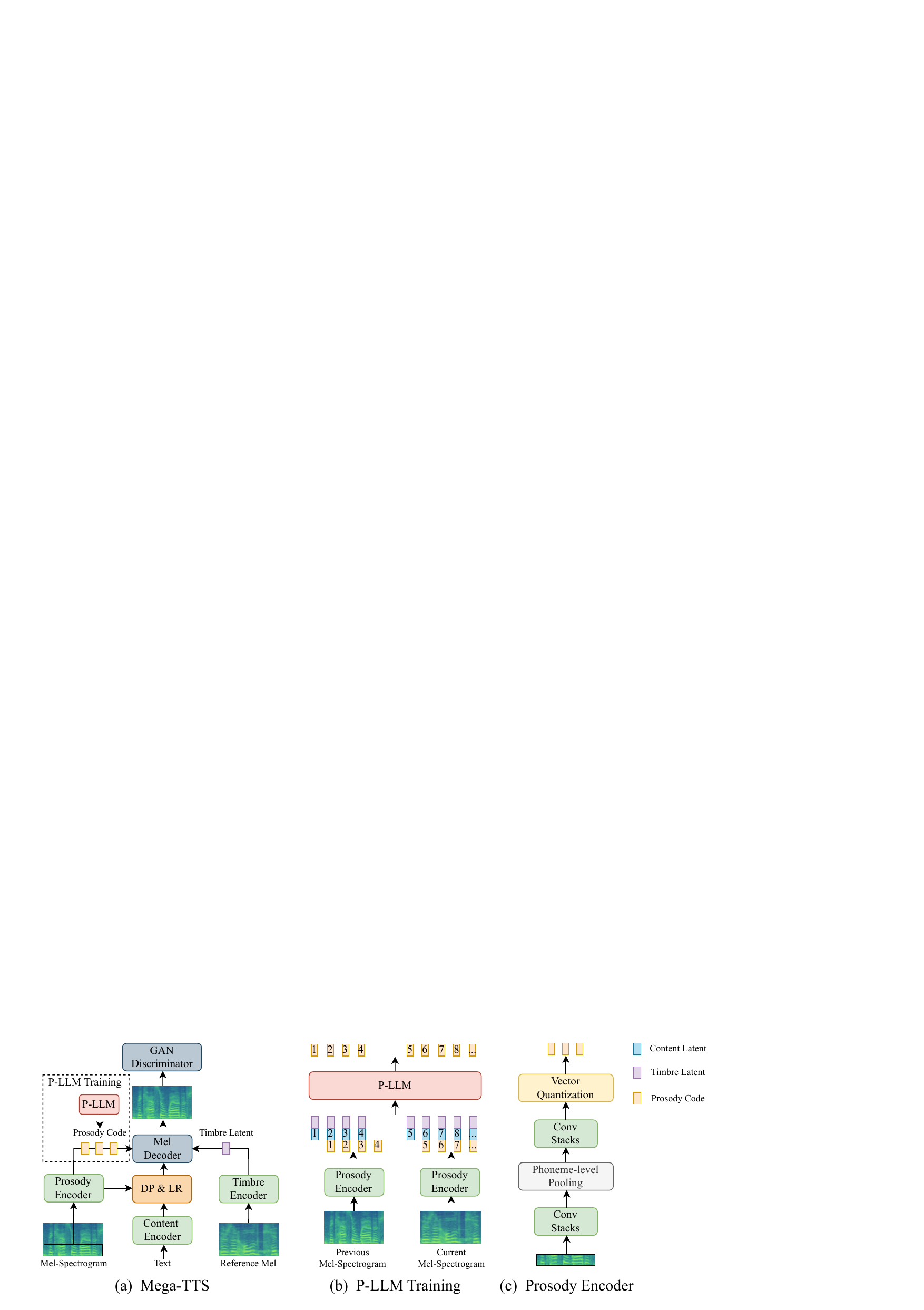
Mega-TTS is a zero-shot text-to-speech system that models speech by decomposing it into content, timbre, prosody, and phase. This intrinsic bias improves naturalness, speaker similarity, and robustness for unseen and cross-lingual speakers, outperforming methods using latent codec tokens.
Links
Paper & demos
Impact
Abstract
Scaling text-to-speech to a large and wild dataset has been proven to be highly effective in achieving timbre and speech style generalization, particularly in zero-shot TTS. However, previous works usually encode speech into latent using audio codec and use autoregressive language models or diffusion models to generate it, which ignores the intrinsic nature of speech and may lead to inferior or uncontrollable results. We argue that speech can be decomposed into several attributes (e.g., content, timbre, prosody, and phase) and each of them should be modeled using a module with appropriate inductive biases. From this perspective, we carefully design a novel and large zero-shot TTS system called Mega-TTS, which is trained with large-scale wild data and models different attributes in different ways: 1) Instead of using latent encoded by audio codec as the intermediate feature, we still choose spectrogram as it separates the phase and other attributes very well. Phase can be appropriately constructed by the GAN-based vocoder and does not need to be modeled by the language model. 2) We model the timbre using global vectors since timbre is a global attribute that changes slowly over time. 3) We further use a VQGAN-based acoustic model to generate the spectrogram and a latent code language model to fit the distribution of prosody, since prosody changes quickly over time in a sentence, and language models can capture both local and long-range dependencies. We scale Mega-TTS to multi-domain datasets with 20K hours of speech and evaluate its performance on unseen speakers. Experimental results demonstrate that Mega-TTS surpasses state-of-the-art TTS systems on zero-shot TTS, speech editing, and cross-lingual TTS tasks, with superior naturalness, robustness, and speaker similarity due to the proper inductive bias of each module. Audio samples are available at https://mega-tts.github.io/demo-page.
1. Problem Setting and Core Idea
Mega-TTS targets zero-shot text-to-speech at scale, with the explicit goal of improving naturalness, speaker similarity, and robustness on unseen speakers and cross-domain prompts. The paper starts from a critique of recent large-scale TTS systems that treat speech primarily as a stream of codec tokens and then model those tokens with autoregressive language models or diffusion models. The authors argue that this design overlooks the intrinsic structure of speech and therefore wastes capacity on attributes that do not need to be modeled in the same way.
Their central claim is that speech can be decomposed into distinct components with different temporal behaviors and inductive biases: content is monotonic with text, timbre is global and stable, prosody changes rapidly and benefits from sequence modeling, and phase is highly dynamic but not semantically important in monaural synthesis. Mega-TTS is designed around that decomposition rather than around a single latent space for all speech attributes. This is what the paper means by intrinsic inductive bias.
2. Overall Architecture
Mega-TTS consists of two major parts: a VQGAN-based TTS model that disentangles and reconstructs mel-spectrograms, and a prosody large language model (P-LLM) that predicts discrete prosody codes. The synthesis pipeline keeps the mel-spectrogram as the intermediate representation instead of converting speech to neural codec latents. The authors argue that this choice helps isolate phase from other factors, because the phase can be reconstructed by a GAN vocoder rather than explicitly modeled by the language model.
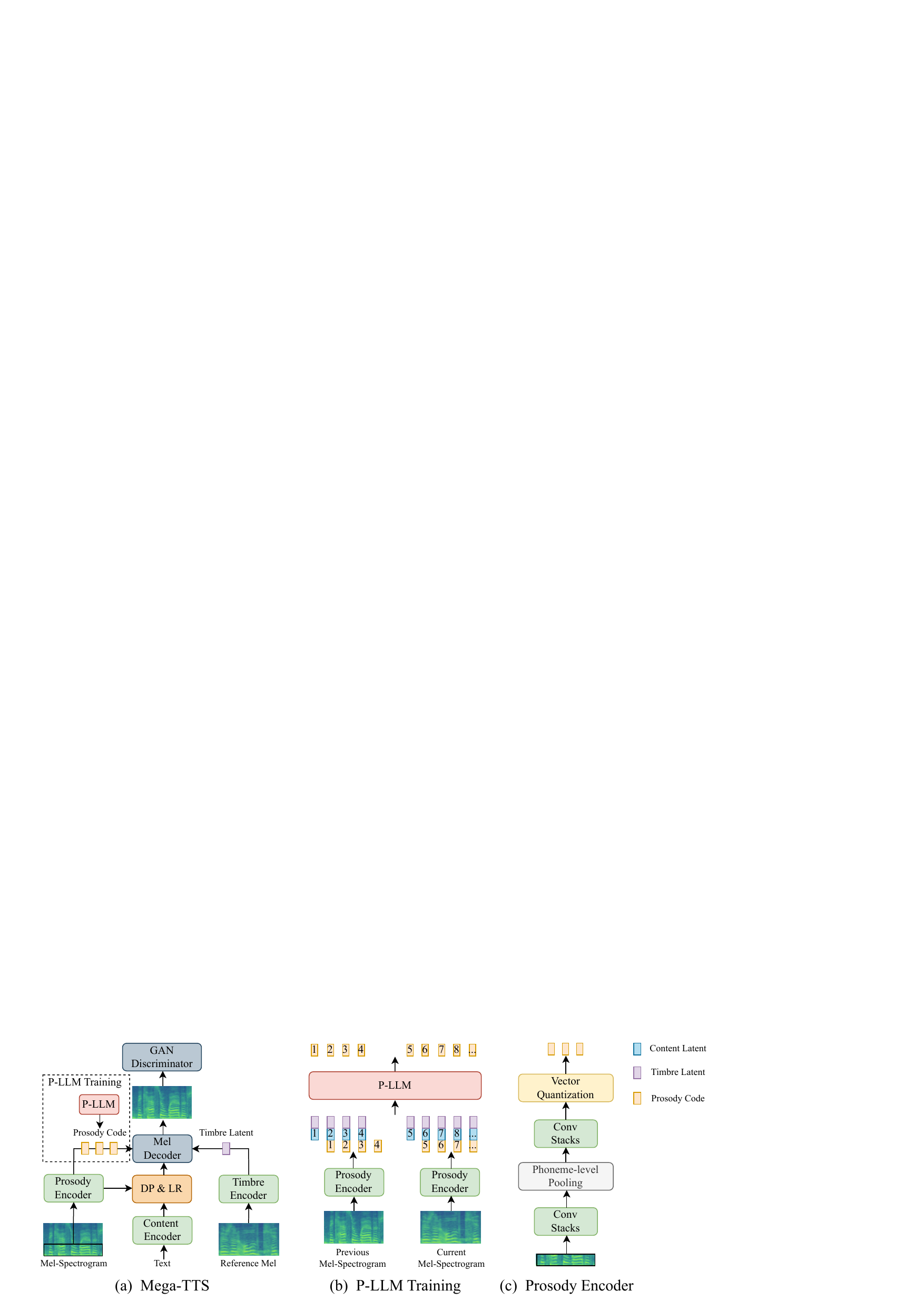
The architecture has three encoders and one decoder in the first stage:
- Content encoder: maps phoneme sequences to content representations and supports monotonic alignment through a duration predictor and length regulator.
- Timbre encoder: maps a reference utterance to a global speaker vector via temporal averaging.
- Prosody encoder: maps low-frequency mel-spectrogram frames to phoneme-level discrete prosody codes using a vector-quantization bottleneck.
- Mel decoder: generates mel-spectrograms from content, timbre, and prosody, trained with a GAN objective to improve perceptual quality.
3. Speech Disentanglement and VQGAN-Based TTS
The first-stage model is intended to disentangle speech into content, prosody, and timbre representations. The training signal is a reconstruction objective plus a carefully designed bottleneck. The bottleneck is important: it pressures the prosody pathway to exclude content and global timbre, leaving mostly prosodic information.
The prosody encoder uses two convolution stacks, a phoneme-level pooling layer, and a VQ bottleneck. The input is restricted to the first 20 mel bins of each frame, which the authors say preserves most prosodic information while reducing speaker/content leakage. The encoder outputs phoneme-level codes $\mathbf{u} = \{u_1, u_2, \dots, u_T\}$ and hidden states $H_{\text{prosody}}$.
The content encoder is a Transformer-based module operating on phoneme embeddings. To address the one-to-many nature of duration prediction, the paper feeds prosody information into the duration predictor. This is a notable design choice: instead of relying only on text for alignment, Mega-TTS explicitly conditions duration estimation on the extracted prosody.
The timbre encoder is a convolutional network followed by temporal average pooling, producing a single global vector that captures speaker identity. This matches the paper’s assumption that timbre varies slowly and is better modeled as a sequence-invariant or slowly varying factor.
The mel decoder is GAN-based, and the discriminator uses multiple window sizes. The paper emphasizes that phase does not need to be predicted by the language model; instead, a vocoder-like decoder can reconstruct a plausible phase from the mel representation.
The first-stage loss is written as:
$$ \mathcal{L}_{\mathrm{VQ}} = \|y_t - \hat{y}_t\|^2 + \|\operatorname{sg}[E(y_t)] - z_{\mathbf{q}}\|_2^2 + \|\operatorname{sg}[z_{\mathbf{q}}] - E(y_t)\|_2^2, $$
$$ \mathcal{L} = \mathbb{E}\left[\mathcal{L}_{\mathrm{VQ}} + \mathcal{L}_{\mathrm{Adv}}\right]. $$
Here $y_t$ is the target speech, $\hat{y}_t$ is the reconstructed speech, $E(\cdot)$ is the encoder, $z_{\mathbf{q}}$ is the quantized latent, and $\mathcal{L}_{\mathrm{Adv}}$ is an LSGAN-style adversarial loss. The loss combines reconstruction fidelity, VQ commitment/codebook terms, and adversarial realism.
4. P-LLM and Prosody-Oriented Decoding
The second stage is a decoder-only transformer that predicts discrete prosody codes. The paper’s main idea is that prosody is the speech component most suitable for language modeling: it has local and long-range dependencies, it changes quickly in time, and it is not perfectly determined by text. In contrast, content is better handled by monotonic alignment machinery, and timbre is better handled as a global vector.
During training, the P-LLM is teacher-forced and optimized with cross-entropy over the prosody code sequence. The autoregressive factorization is:
$$
p\left(\tilde{\mathbf{u}} \mid \mathbf{u}, H_{\text{content}}, \tilde{H}_{\text{timbre}}, \tilde{H}_{\text{content}}; \theta\right)
= \prod_{t=0}^{T} p\left(\tilde{u}_t \mid \tilde{u}_{
The conditioning inputs combine prompt prosody codes, prompt and target content representations, and the prompt
timbre vector. The paper calls the resulting inference pipeline prosody-oriented speech decoding:
the target speech is generated by first predicting target prosody codes and then decoding them with the target text
content and prompt speaker identity.
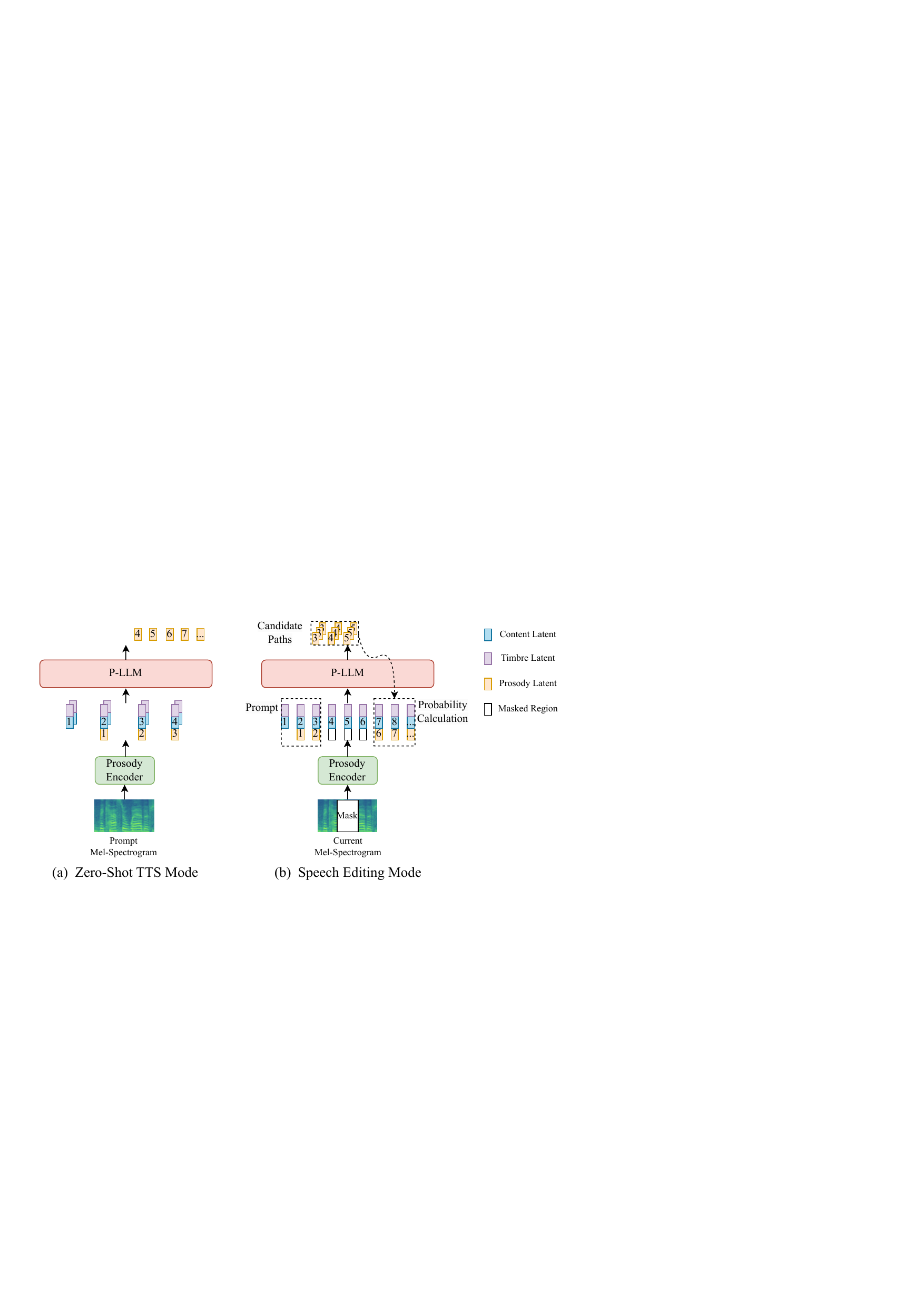
For zero-shot TTS, the P-LLM uses prompt prosody plus the speaker and content conditioning signals to generate the
target prosody codes. The final mel decoder then combines target content, prompt timbre, and predicted prosody to
synthesize speech. The paper uses top-$k$ random sampling at inference to increase diversity.
Cross-lingual TTS uses the same mechanism, except the prompt may come from a different language. The paper uses this
to demonstrate that the architecture is not tied to English-only prompts or targets.
Mega-TTS also supports speech editing by treating the masked region as a prosody completion problem. Instead of
blending waveform or mel segments directly, the model works in the discrete prosody space. The authors generate $N$
candidate left-to-right paths from the left boundary of the edit region, then rescore them by also considering the
right boundary. The candidate with the highest combined likelihood is selected.
The paper presents this as a way to obtain smooth transitions at both boundaries of the edited region. Compared
with an L2-based fusion point, the discrete-prosody approach is intended to better reflect perceptual continuity.
The speech-editing likelihood objective is described as maximizing candidate paths that are consistent with both the
left and right context. In the paper’s notation, the right-side ground-truth prosody codes are used to score
candidate paths after the left-side proposal stage.
The paper scales Mega-TTS to a multi-domain, multi-lingual training set with 20K hours of speech:
GigaSpeech and WenetSpeech. The training data are processed with automatic speaker
diarization to recover speaker identities and with an external forced-alignment tool to obtain phoneme-level
alignments. The authors note that some clips are discarded when diarization confidence is too low or when multiple
speakers overlap.
Training is performed on 8 NVIDIA A100 GPUs with a batch size of 30 sentences per GPU. The optimizer
is Adam with $\beta_1 = 0.9$, $\beta_2 = 0.98$, and $\epsilon = 10^{-9}$, following the learning-rate schedule of
the Transformer paper. The first-stage VQGAN-based TTS model is trained for 320k steps, and the
P-LLM is trained for 100k steps. Inference uses a pre-trained HiFi-GAN V1 vocoder to
convert mel-spectrograms into waveform audio.
The model has 222.5M parameters. The appendix provides the following key configuration details:
The main evaluation datasets are VCTK and LibriSpeech test-clean. The paper samples
10 utterances for each of 40 speakers, giving 400 evaluation utterances per dataset. For each sample, a different
utterance of the same speaker is used as the prompt. The paper emphasizes that all evaluation speakers are unseen
during training.
Objective evaluation uses three metrics:
Subjective evaluation uses MTurk with at least 20 listeners per audio sample and 50 sampled utterances per dataset.
The paper reports MOS-Q for audio quality, MOS-P for prosody, MOS-S for speaker similarity, and CMOS-Q / CMOS-P for
pairwise comparisons. Listeners are instructed to focus on the target aspect and ignore the others, which is
important because the authors are trying to separate quality, prosody, and identity judgments.
On zero-shot TTS, Mega-TTS outperforms YourTTS on both VCTK and LibriSpeech test-clean in terms of naturalness,
prosody, speaker similarity, and pitch distance. The gains are especially clear in speaker similarity and pitch
preservation, which are the metrics most directly connected to the paper’s decomposition of speech factors.
The paper also compares Mega-TTS against VALL-E using pairwise subjective metrics. Mega-TTS is reported with
CMOS-Q $= 0.00$, CMOS-P $= 0.00$, and MOS-S $= 4.11 \pm 0.21$, while VALL-E has CMOS-Q $= -0.23$, CMOS-P $= -0.27$,
and MOS-S $= 4.06 \pm 0.22$. The authors interpret this as showing that introducing the speech-specific
decomposition improves perceptual quality and controllability relative to codec-token generation.
On speech editing, Mega-TTS improves all three MOS dimensions over EditSpeech and A$^3$T on VCTK. This task is a
good stress test for the discrete prosody representation because the model must preserve the unedited context while
smoothly synthesizing the missing segment.
The paper attributes these gains to the new discrete-prosody editing strategy. Rather than fusing left and right
mel predictions by an L2 criterion, Mega-TTS explicitly reasons over candidate prosody sequences and scores them by
boundary consistency.
Cross-lingual TTS is evaluated against YourTTS and VALL-E X. The subjective comparison uses six speech pairs from
LibriSpeech, EMIME, and AISHELL-3, while the objective evaluation uses the full LibriSpeech test-clean set as the
target text and an AISHELL-3 prompt for each sentence.
The reported WER reduction from 7.59% to 3.04% is a substantial improvement in intelligibility, and the speaker
similarity score also improves. This is consistent with the paper’s claim that modeling prosody separately from
content and timbre helps preserve both identity and linguistic correctness across languages.
The paper explicitly checks robustness using 50 particularly hard sentences, following the FastSpeech benchmark
style. The metric counts repeated words, skipped words, and sentences with errors. Mega-TTS has zero repeats, zero
skips, and zero error sentences on this test, matching the robustness of FastSpeech and outperforming Tacotron and
VALL-E on this criterion.
The appendix contains several analyses that directly support the paper’s main design choices. These are useful
because they connect the theory of inductive bias to concrete behavior under controlled perturbations.
The authors vary the vector-quantization bottleneck size and measure disentanglement quality by reconstructing a
mel-spectrogram after shuffling timbre embeddings. They report pitch distance and speaker similarity, and find that
a channel size of 256 with embedding size 2048 gives the best combination of low pitch error and high speaker
similarity.
The paper varies the amount of training data and measures zero-shot performance on LibriSpeech test-clean using
pitch distance, speaker similarity, and average absolute duration error. Performance improves with more data, which
supports the scaling argument made throughout the paper.
Increasing the hidden size of the P-LLM improves both pitch and speaker similarity. The strongest setting in the
appendix is the 512-dimensional hidden state, which performs markedly better than 128 or 256 dimensions.
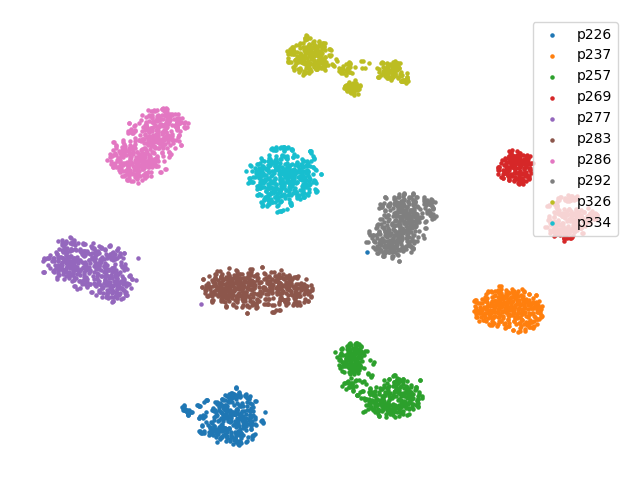
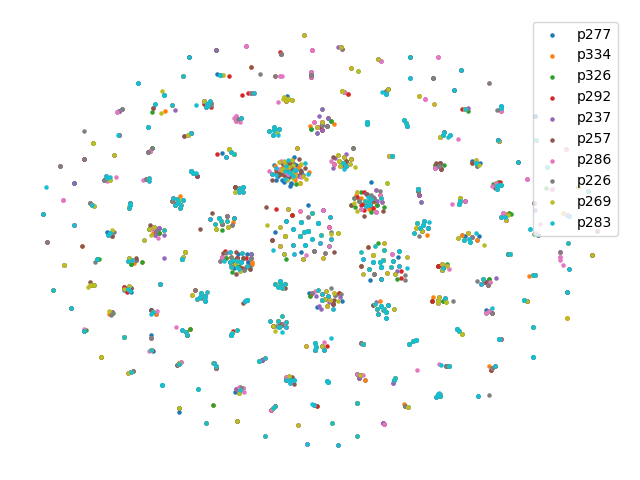
The appendix uses T-SNE visualizations to inspect the learned representations on unseen speakers from VCTK. The
timbre embeddings cluster by speaker identity, while the prosody embeddings overlap more across speakers. This is
direct evidence that the encoders are disentangling speaker identity from prosodic variation, which is exactly the
behavior the later P-LLM relies on.
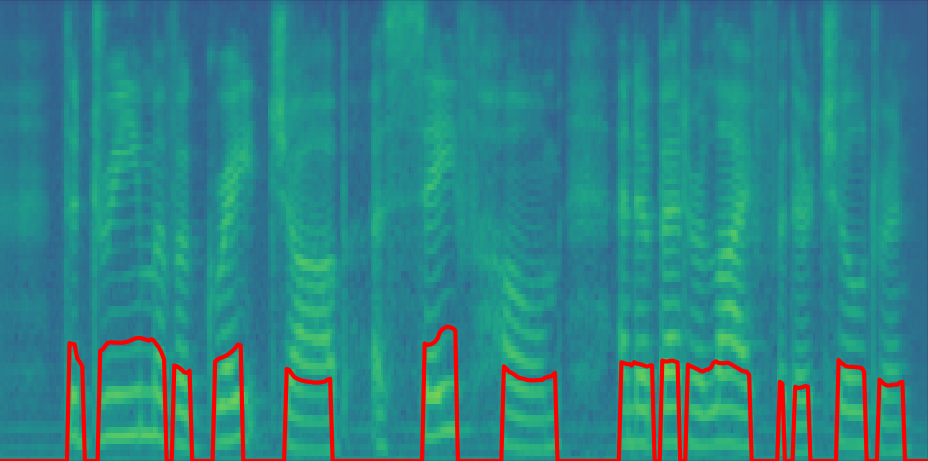
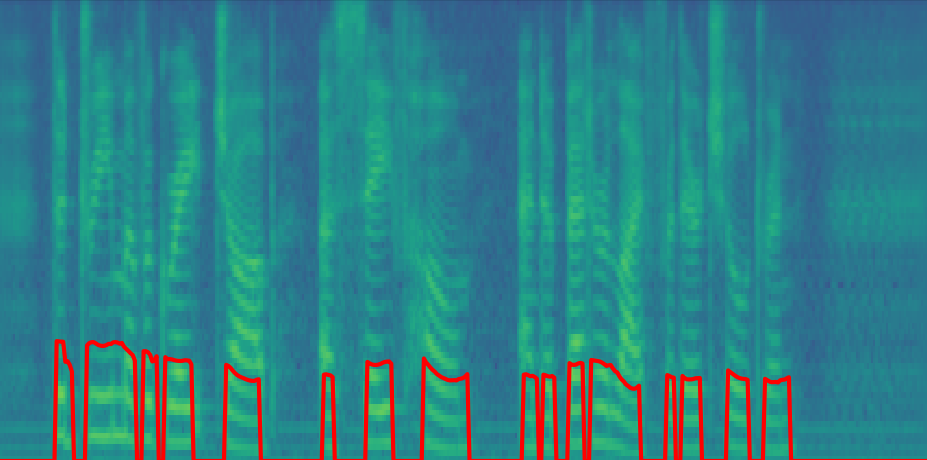
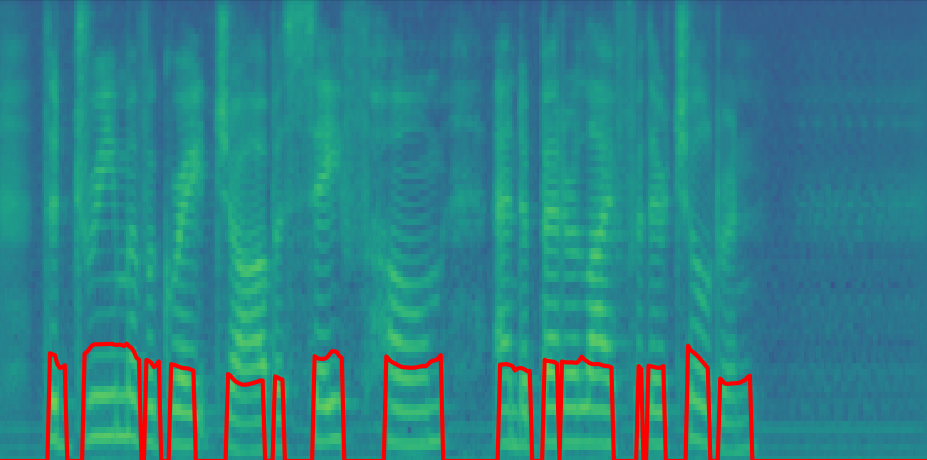
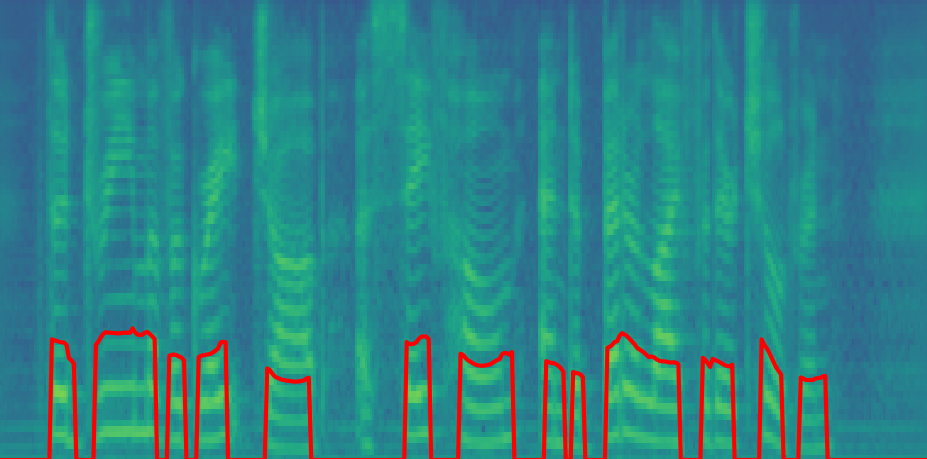
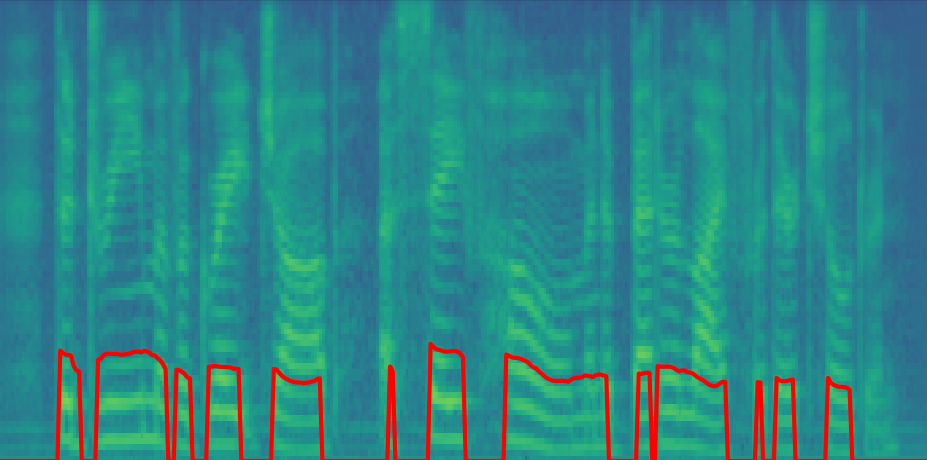
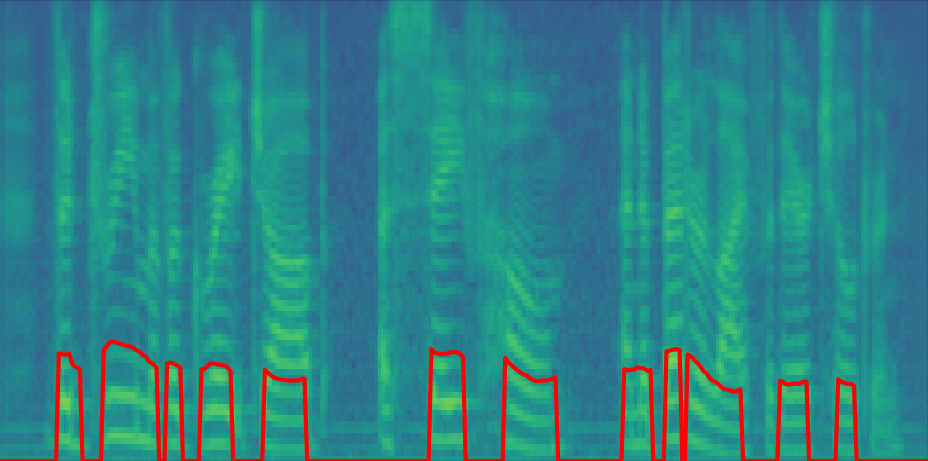
The appendix shows multiple mel-spectrograms generated from different random seeds. The visualizations suggest that
the model can produce diverse prosody patterns and frequency details rather than collapsing to a single stereotyped
output. This is consistent with the use of sampling in the P-LLM stage.
The paper is unusually explicit about its limitations. First, although the model is trained on 20K hours of
multi-domain data, it still cannot cover every voice; in particular, speakers with extremely heavy accents are not
imitated well. The authors propose scaling to 200K hours in future work. Second, reconstruction quality degrades in
the presence of background music or very loud reverberation, which suggests the GAN-based reconstruction pipeline is
still sensitive to acoustic noise.
The broader-impact discussion also acknowledges misuse risks such as voice spoofing and deepfake generation. The
authors suggest detector development and license restrictions as possible mitigations.
4.1 Zero-Shot TTS and Cross-Lingual TTS Inference
4.2 Speech Editing Inference
5. Model Size, Training Setup, and Data
Module
Key settings
Prosody encoder
5 layers, hidden size 320, 1D kernel size 5, VQ embedding size 2048, embedding channel 256
Content encoder
4 layers, phoneme embedding size 320, hidden size 320, kernel size 5, filter size 1280
Timbre encoder
5 layers, hidden size 320, 1D kernel size 31
Mel decoder
5 layers, hidden size 320, 1D kernel size 5
P-LLM
8 decoder layers, hidden size 512, 8 attention heads, kernel size 5, channel size 2048, prosody code embedding size 2050, 7 contextual sentences
Multi-length discriminator
3 discriminators, window sizes 32 / 64 / 128, 3 Conv2D layers, hidden size 192
6. Experimental Protocol
7. Main Results
7.1 Zero-Shot TTS
Dataset
Method
Subjective
Objective
MOS-Q ↑
MOS-P ↑
MOS-S ↑
Pitch ↓
Speaker ↑
VCTK
Ground Truth
4.35 ± 0.11
4.48 ± 0.10
4.33 ± 0.13
-
0.915
YourTTS
4.04 ± 0.10
4.18 ± 0.09
3.76 ± 0.12
32.43
0.847
Mega-TTS
4.27 ± 0.09
4.32 ± 0.11
4.27 ± 0.10
17.45
0.877
LibriSpeech
Ground Truth
4.23 ± 0.13
4.49 ± 0.11
4.29 ± 0.16
-
0.956
YourTTS
3.83 ± 0.12
4.06 ± 0.13
3.22 ± 0.21
44.05
0.909
Mega-TTS
4.08 ± 0.17
4.21 ± 0.17
3.90 ± 0.18
35.46
0.936
Method
CMOS-Q
CMOS-P
MOS-S ↑
VALL-E
-0.23
-0.27
4.06 ± 0.22
Mega-TTS
0.00
0.00
4.11 ± 0.21
7.2 Speech Editing
Method
MOS-Q ↑
MOS-P ↑
MOS-S ↑
EditSpeech
3.57 ± 0.12
3.87 ± 0.14
3.93 ± 0.14
A$^3$T
3.73 ± 0.13
3.96 ± 0.14
3.97 ± 0.12
Mega-TTS
3.81 ± 0.14
4.11 ± 0.14
4.36 ± 0.16
7.3 Cross-Lingual TTS
Method
MOS-Q ↑
MOS-P ↑
MOS-S ↑
WER ↓
Speaker ↑
YourTTS
3.65 ± 0.21
3.92 ± 0.18
3.32 ± 0.27
7.59%
0.883
VALL-E X
3.73 ± 0.17
3.97 ± 0.18
3.81 ± 0.16
-
-
Mega-TTS
3.85 ± 0.17
4.08 ± 0.19
3.86 ± 0.18
3.04%
0.919
7.4 Robustness on Hard Sentences
Method
Repeats
Skips
Error Sentences
Error Rate
Tacotron
10
16
22
44%
VALL-E
8
11
14
28%
FastSpeech
0
0
0
0%
Mega-TTS
0
0
0
0%
8. Ablations and Representation Analysis
8.1 Information Bottleneck Hyperparameters
Channel size × Embedding size
Pitch ↓
Speaker ↑
64 × 512
73.82
0.719
256 × 2048
49.30
0.941
1024 × 4096
78.84
0.707
8.2 Dataset Size Ablation
Dataset usage
Total time (hours)
Pitch ↓
Speaker ↑
Duration ↓
GigaSpeech
10K
36.50
0.935
62.61
LibriSpeech
960
43.90
0.915
69.85
VCTK
44
81.33
0.828
82.39
8.3 P-LLM Capacity Ablation
P-LLM hidden size
Pitch ↓
Speaker ↑
128
82.24
0.917
256
71.74
0.920
512
35.46
0.936
8.4 Representation Visualizations
8.5 Diversity Across Random Seeds
9. Limitations and Broader Impact
10. Technical Takeaways